A Place for What Comes Next
On collecting, rebuilding after the Eaton Fire, and the life of artworks beyond the studio
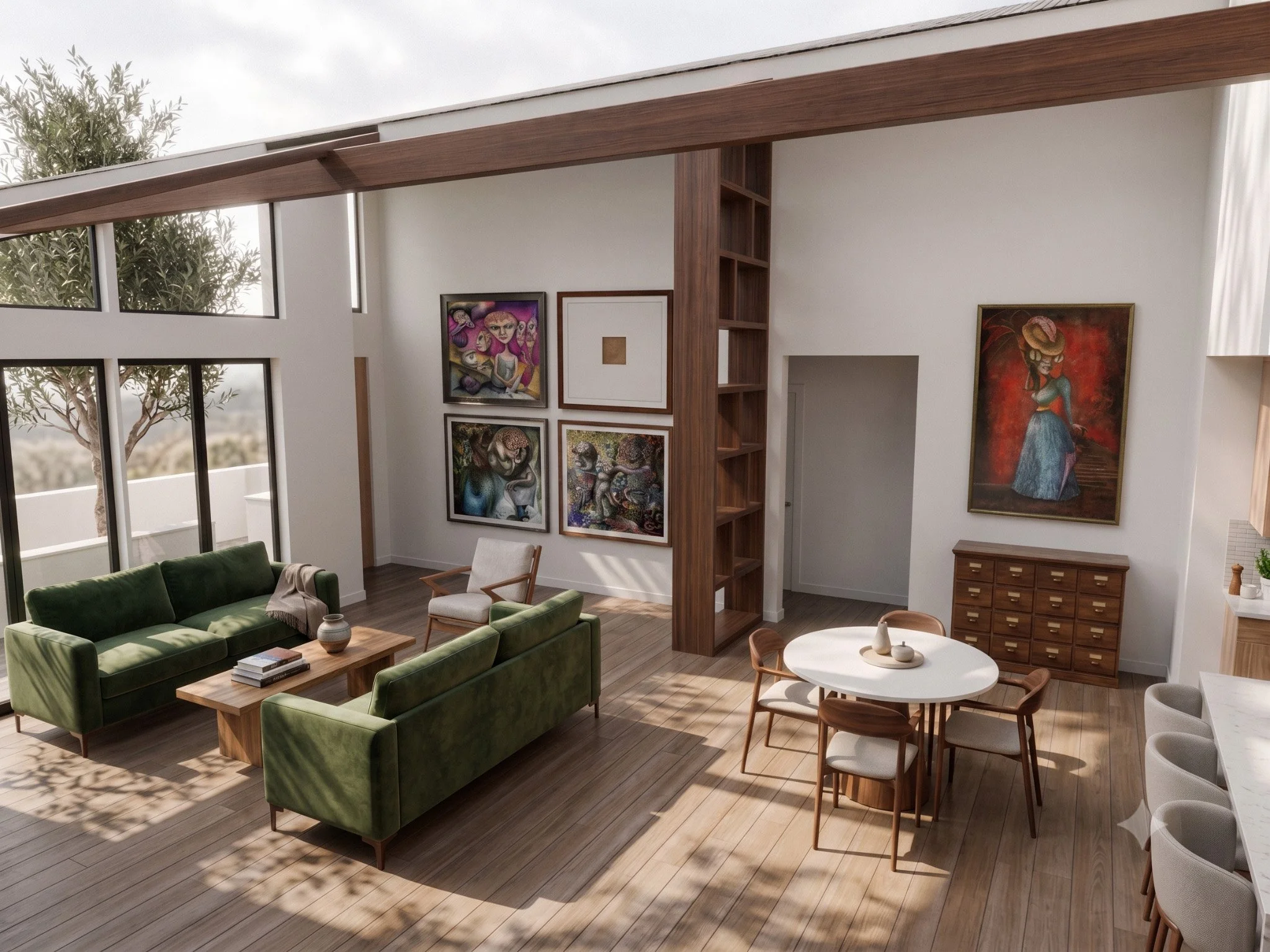
Architectural visualization of the collectors’ new home, showing five works by Nathalie Tierce integrated into the interior design. Architectural visualizations shared with permission of the collectors.
For an artist, this is one of the less visible parts of a painting’s life. We tend to think of a work leaving the studio as an ending—the sale, the collection, the placement. But in reality, that is often where another life begins. Paintings move with people. They become part of rooms, routines, memories, conversations, and sometimes, unexpectedly, part of the architecture of a future home.
One wall in the new home is being planned around a grouping of four similarly scaled mixed-media works. Three already exist in the collection; the fourth will be commissioned later. In the meantime, the collectors wanted the fourth frame to be present from the beginning—an intentional absence rather than an empty hole.
Their idea was a ransom note.
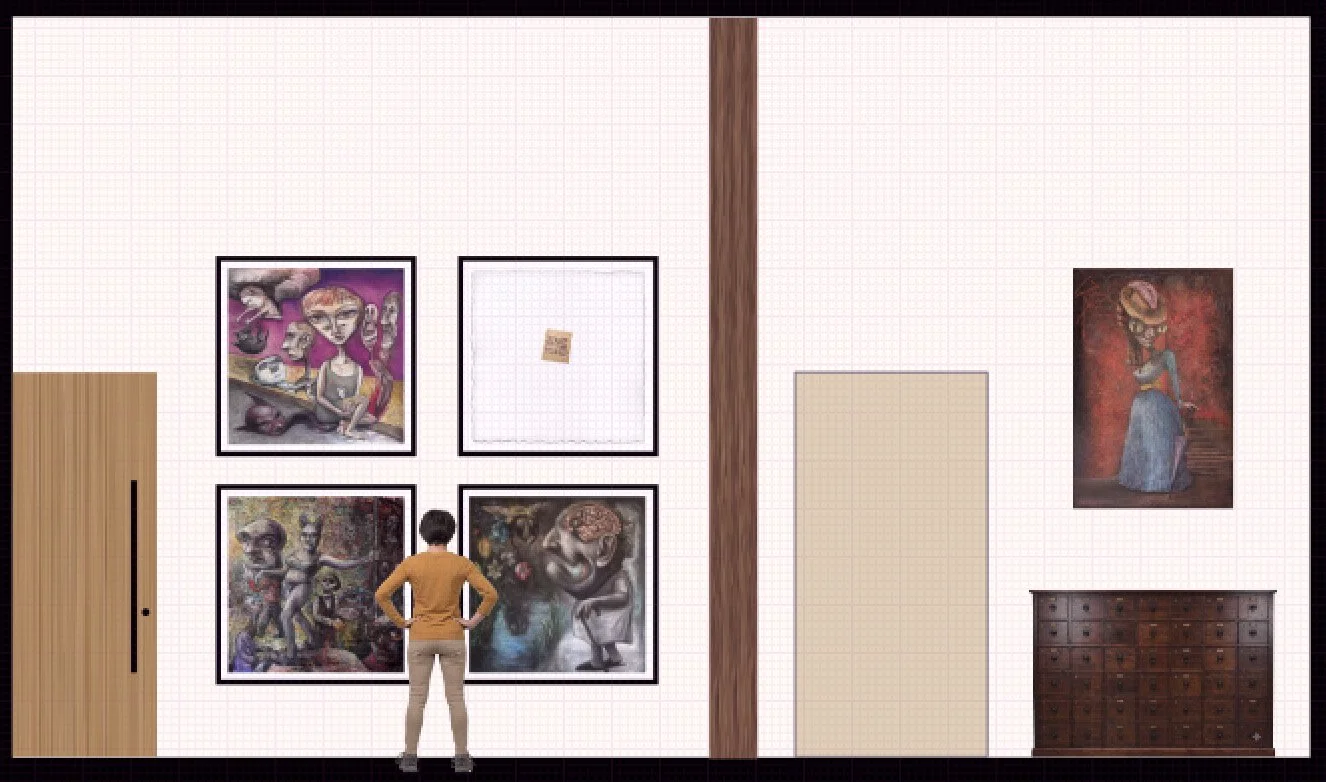
Interior elevation showing the planned placement of five works by Nathalie Tierce, including the four-work grouping and a fifth work across the room divider. Architectural visualizations shared with permission of the collectors.
So I made one.
The fourth frame will hang alongside the other three, containing a ransom note demanding the arrival of the missing artwork. I won’t reveal the note itself—the collectors won’t see it until it is framed—but I love that this charming, slightly absurd interruption will become part of the installation’s history.
For the moment, the empty space isn’t really empty at all.
It is holding a place for something that hasn’t happened yet.
Perhaps that is what moves me most about this entire project.
After losing so much, my collectors are not trying to reconstruct every detail of the home they had. They are creating another chapter. There are things from before that remain important, new things entering their lives, and spaces being intentionally left for what is still to come.
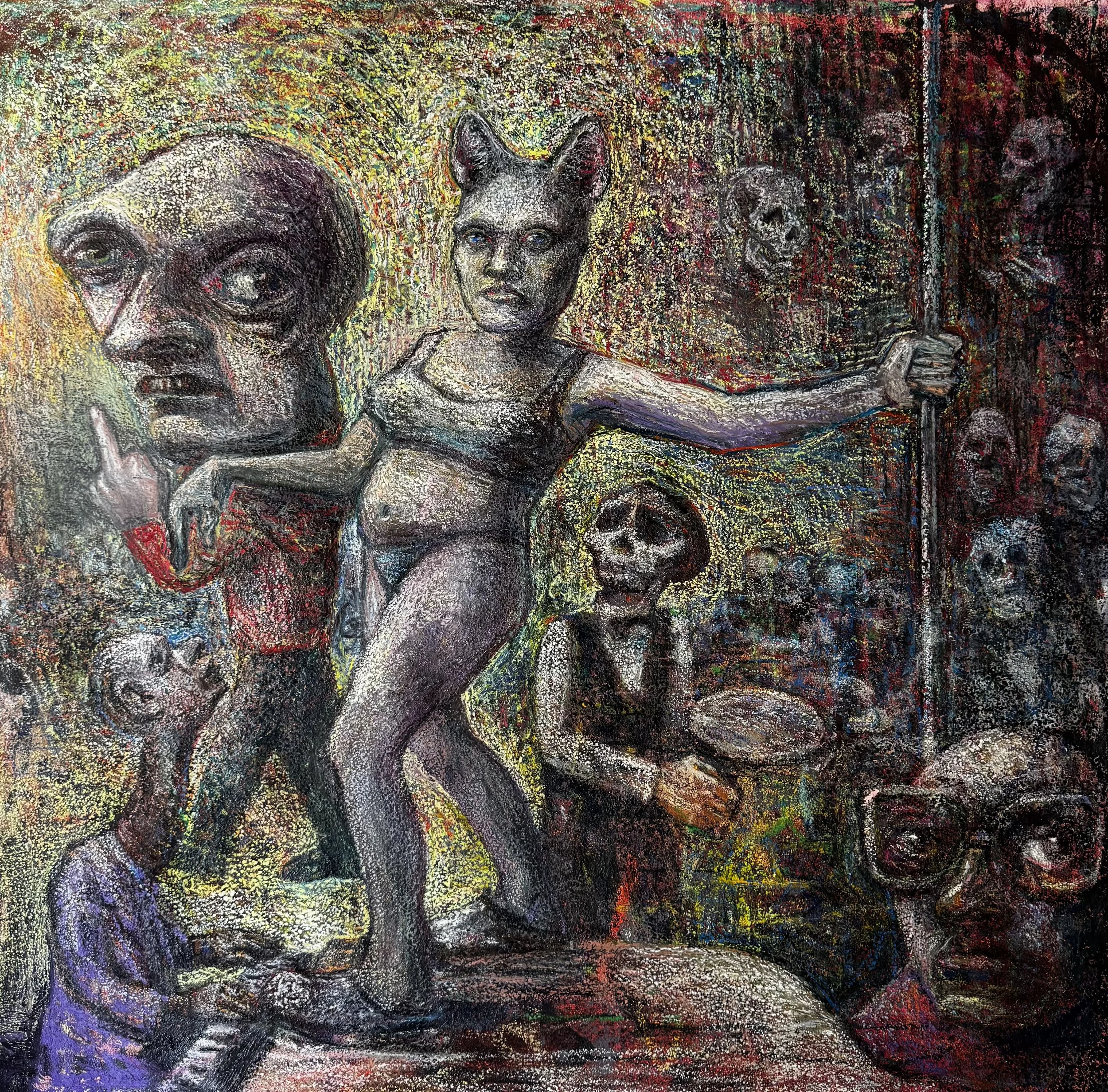
She’s Over It, 42" x 42", oil pastel on Arches 140 lb. cold-press watercolor paper
One of the works they chose was She’s Over It.
After seeing the story and video I had made about the painting, they also acquired Is This Really Happening?
For me, there was something particularly poignant about these paintings finding their way to them. Their titles were conceived in entirely different circumstances, of course, but suddenly they seemed to be having another conversation.
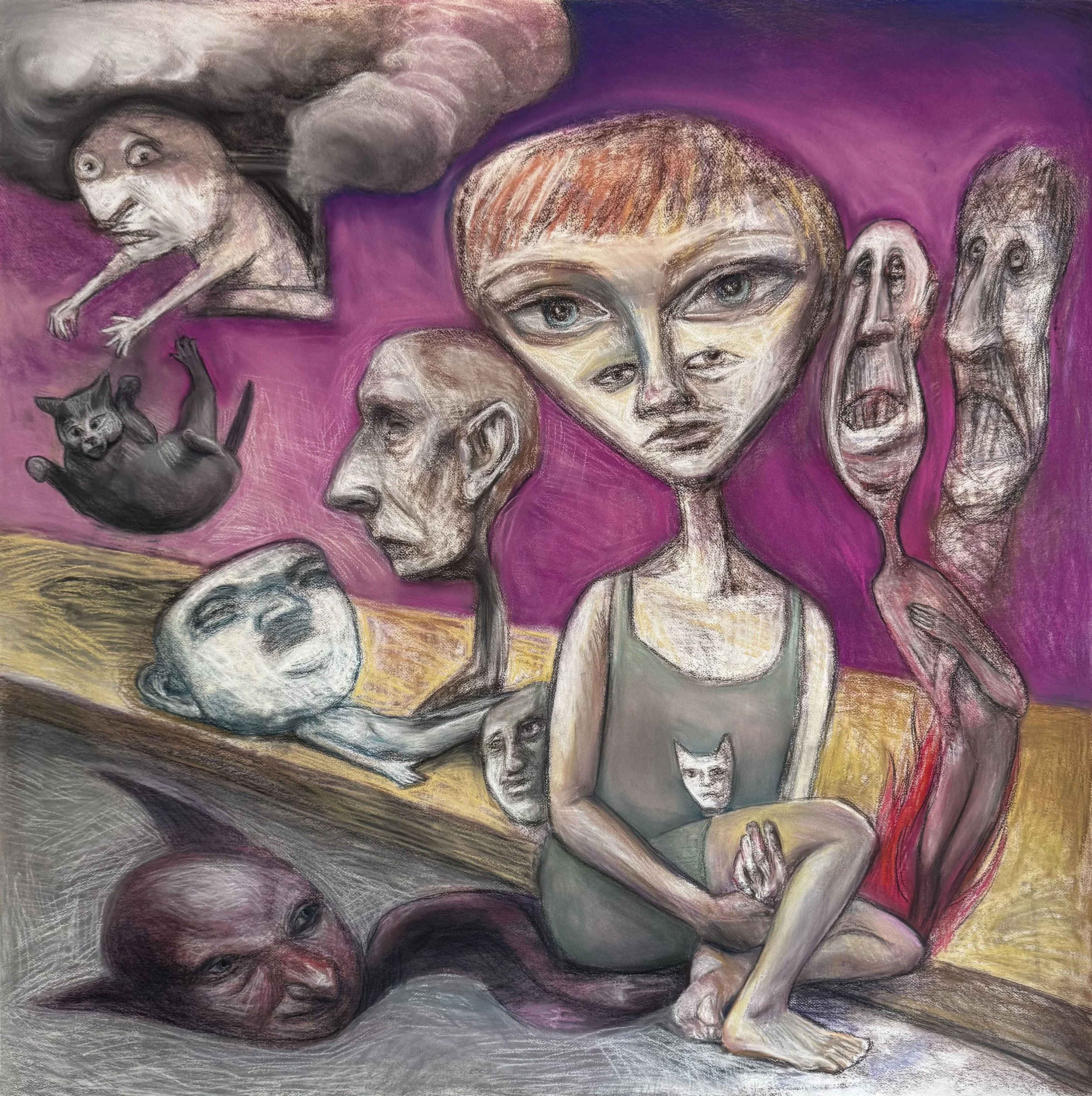
Is This Really Happening?, 42" x 42", pastel on Arches 140 lb. cold-press watercolor paper
The new works went up in their temporary home.
And then something happened that I found enormously touching: the works began appearing in the plans for their new home. Their architect created interior visualizations showing the paintings incorporated into the rooms—not as something to be considered once the architecture was complete, but as part of the home while it was still being imagined.
I was able to see my paintings on walls that do not yet exist.
That is an extraordinary privilege for an artist.
As an artist, you release paintings into the world without knowing exactly what their lives will be. They leave the studio and become part of someone else’s surroundings, memories and private rituals.
Very occasionally, you are allowed to see just how deeply that relationship can go.
I am profoundly grateful to these collectors for allowing my work to accompany them into this new home—and for allowing me to share a glimpse of it with you.
Here is to what survives, what changes, and what is still waiting to be made.