R. Crumb wrote in a personal letter to me, “You are a genuine visionary artist with a direct line to your subconscious."
Gallery
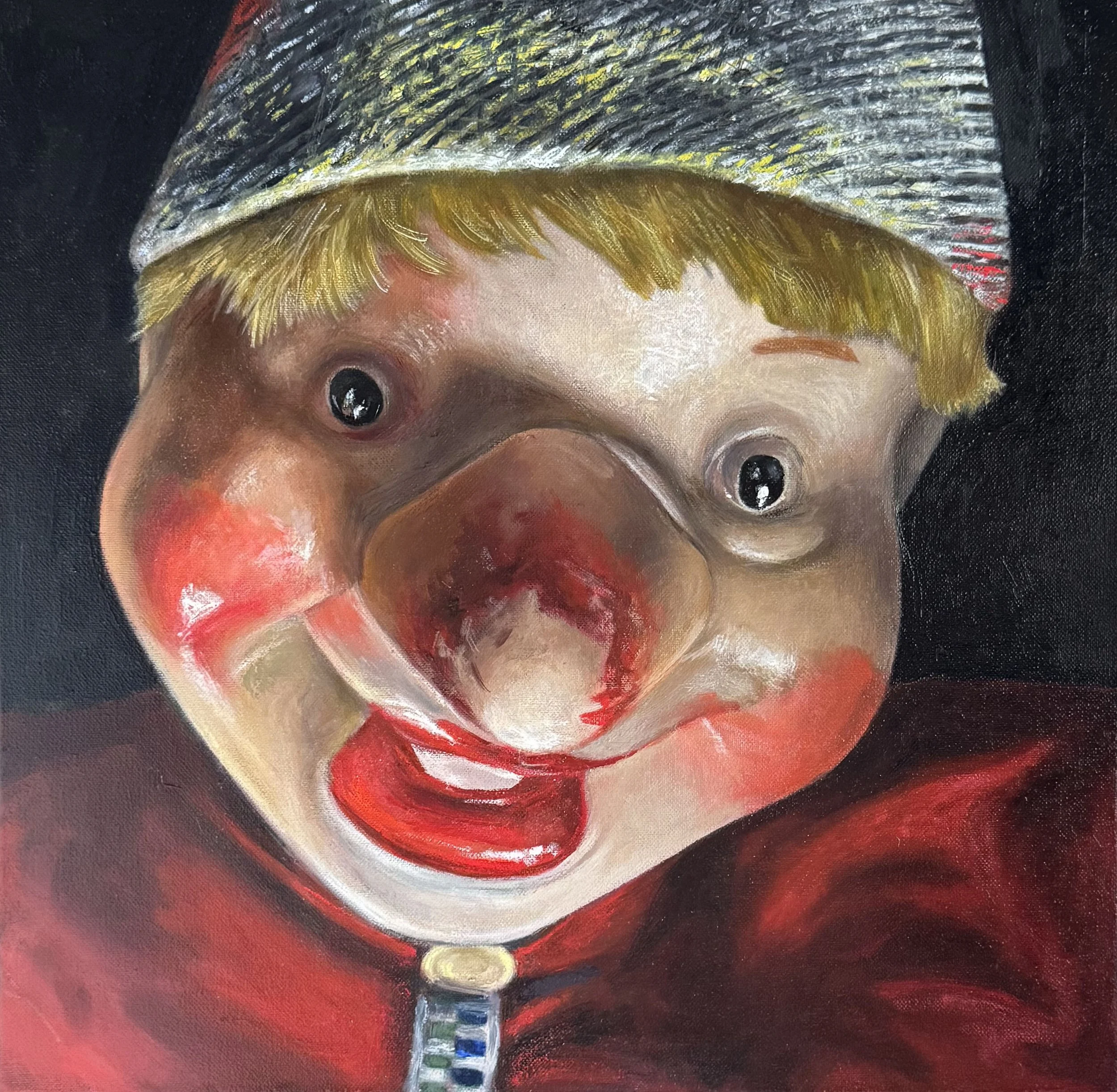
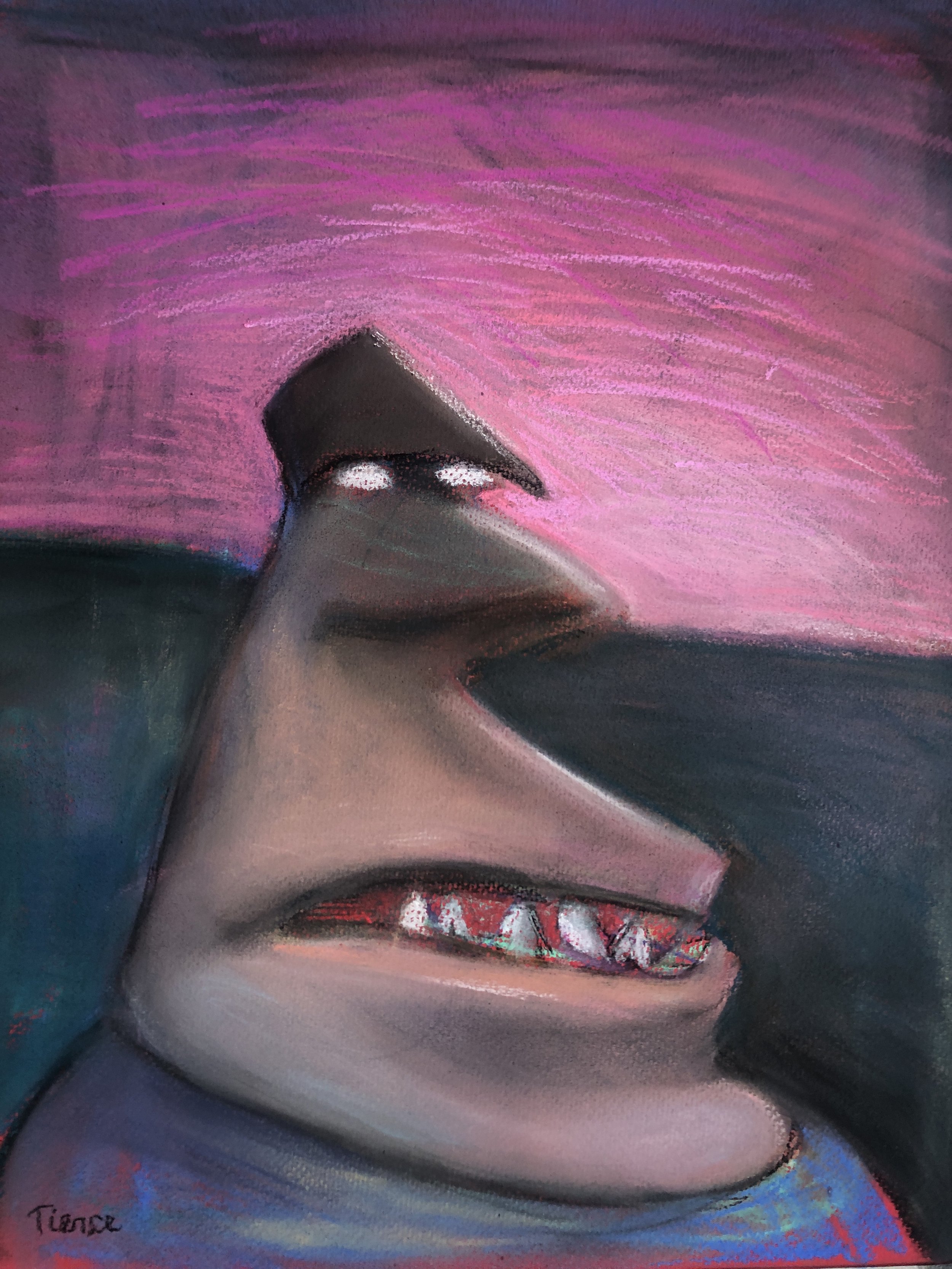
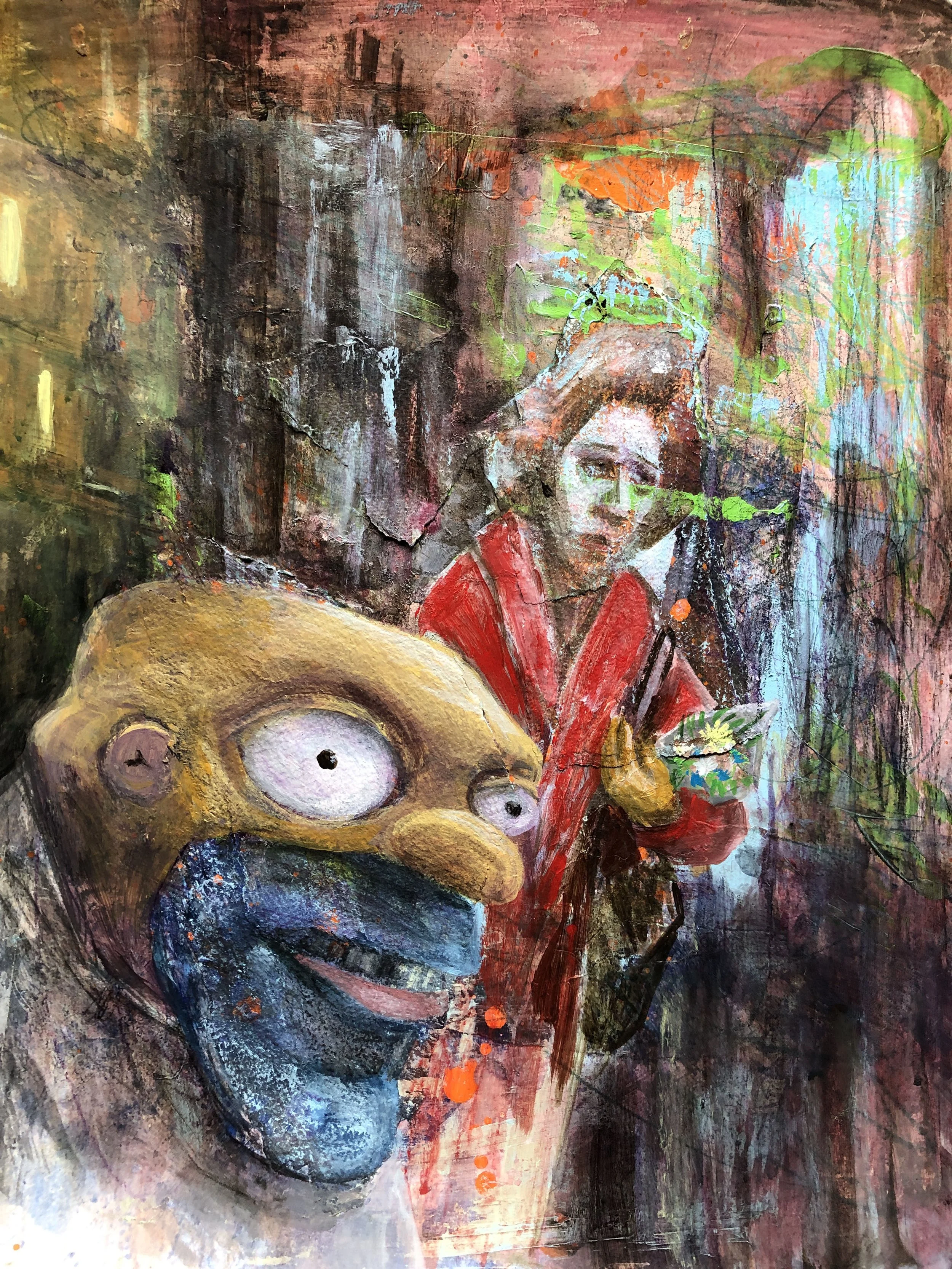
Zilch in the Dark captures the eerie stillness of a puppet's unsettling grin, emerging from the shadows with a jarring mix of innocence and menace. Painted in oil on canvas, this portrait confronts the viewer with a fixed, gleaming stare and exaggerated features that blur the line between toy and torment. With its glossy eyes, bulbous nose, and manic red-lipped smile, Zilch radiates a disturbing cheerfulness that hints at something much deeper—and darker—lurking beneath the surface.
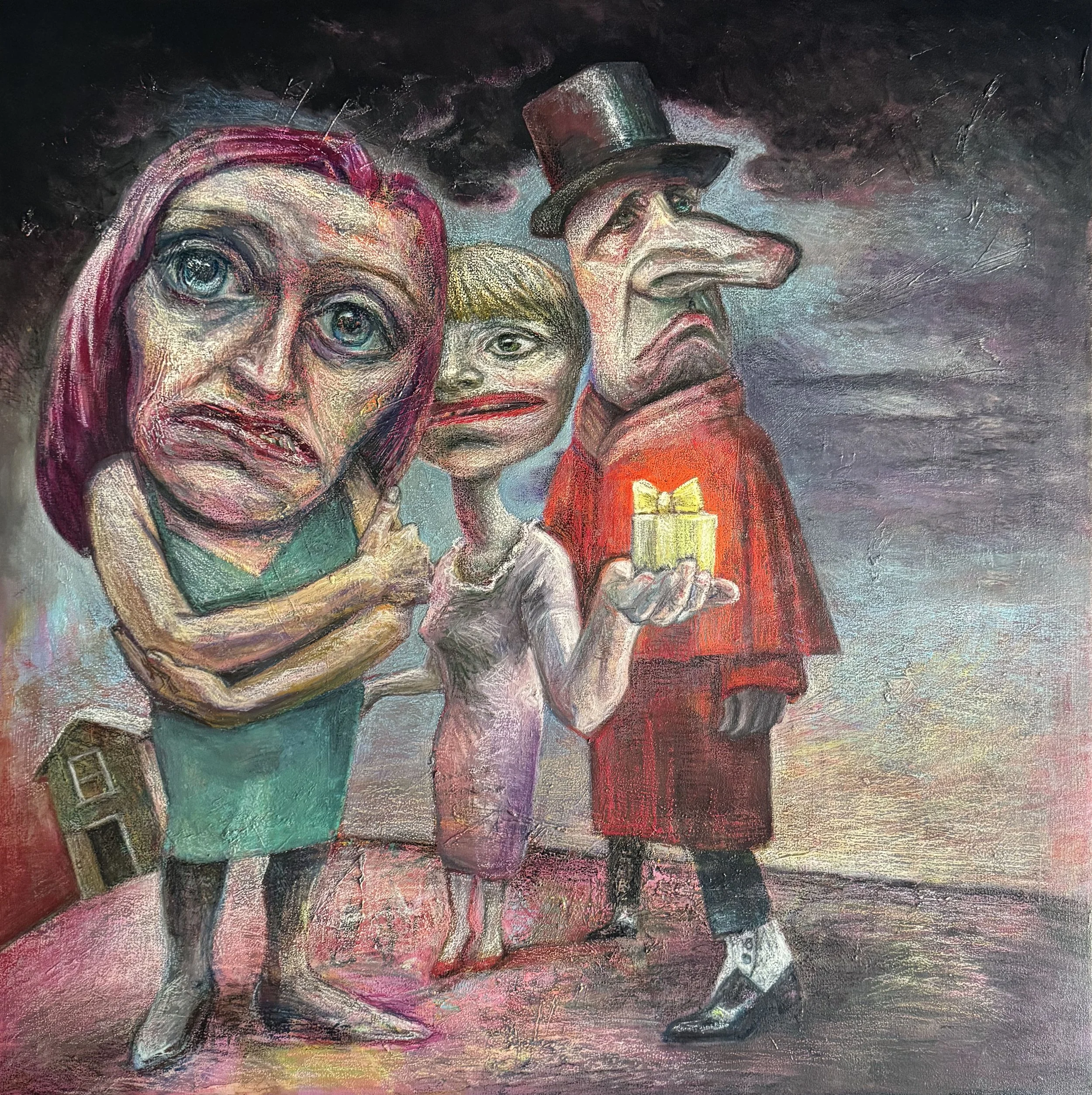
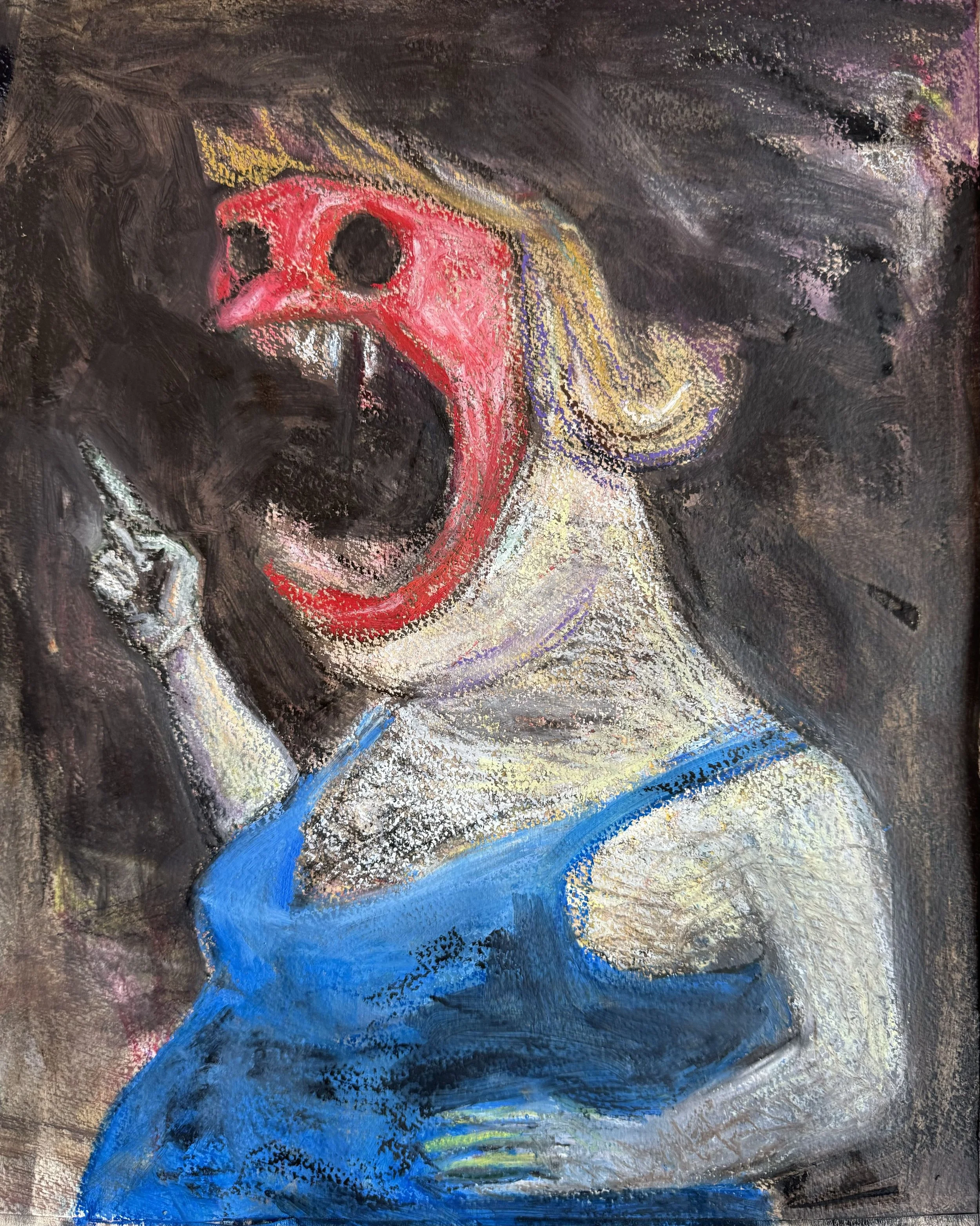
Not all gifts are treasures. Some are burdens, wrapped in ribbons of obligation, handed to us with exceptions we never agreed to. This piece is about those ties- connections that drain, offers that come with a cost. I painted this as a way to sever those ties, to reject the things I never wanted but felt I had to keep. Sometimes, healing means handing back the box and walking away.
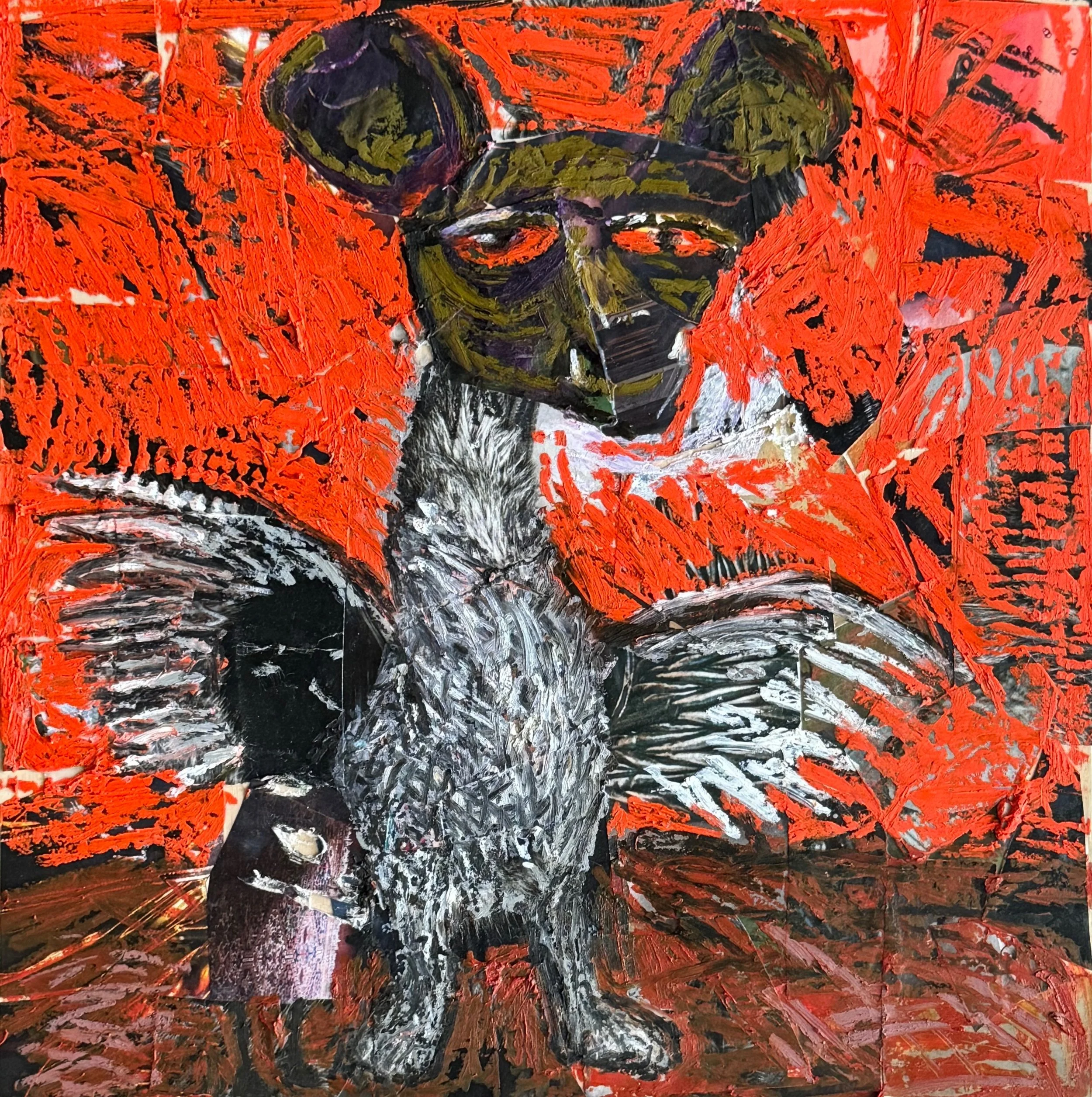
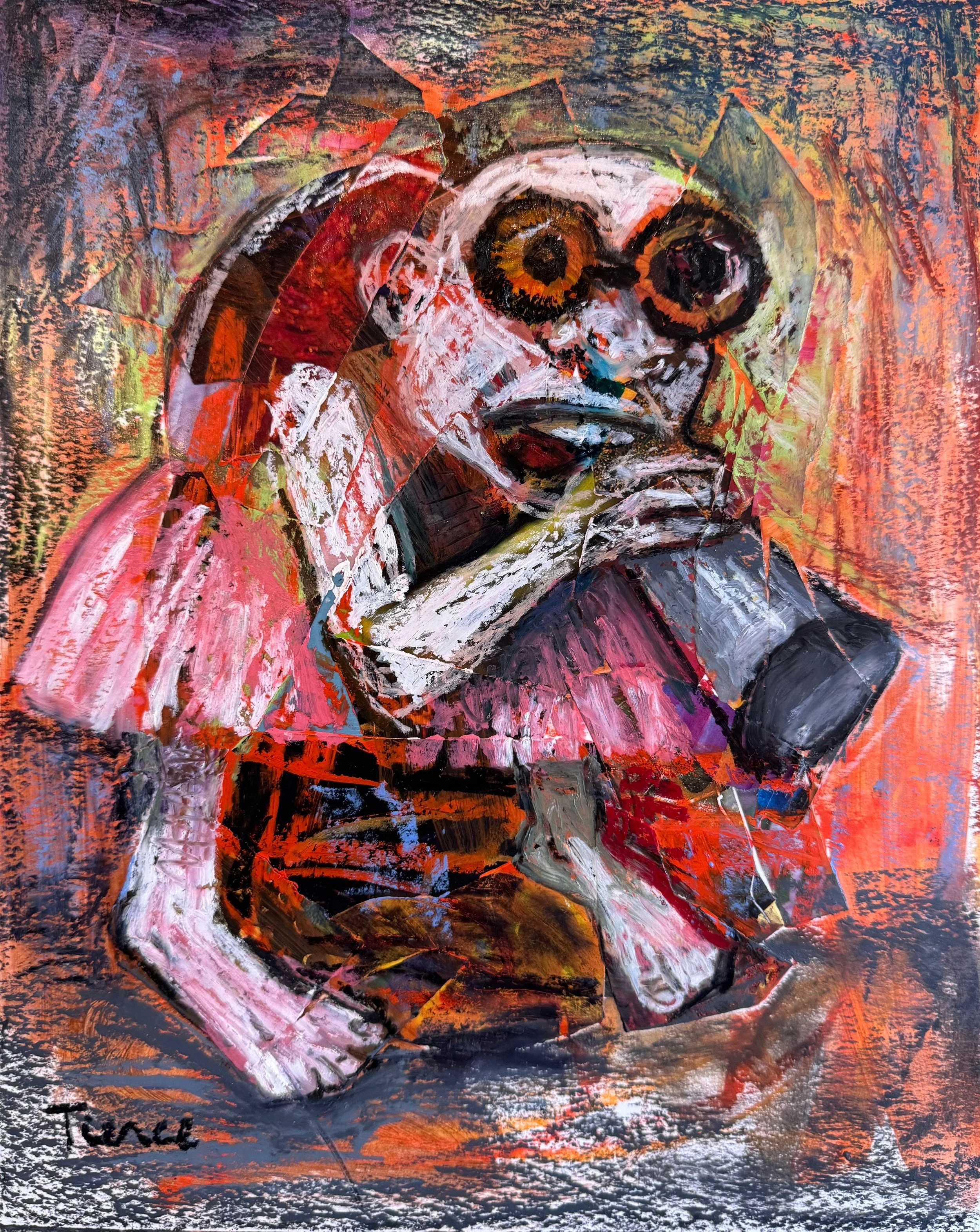
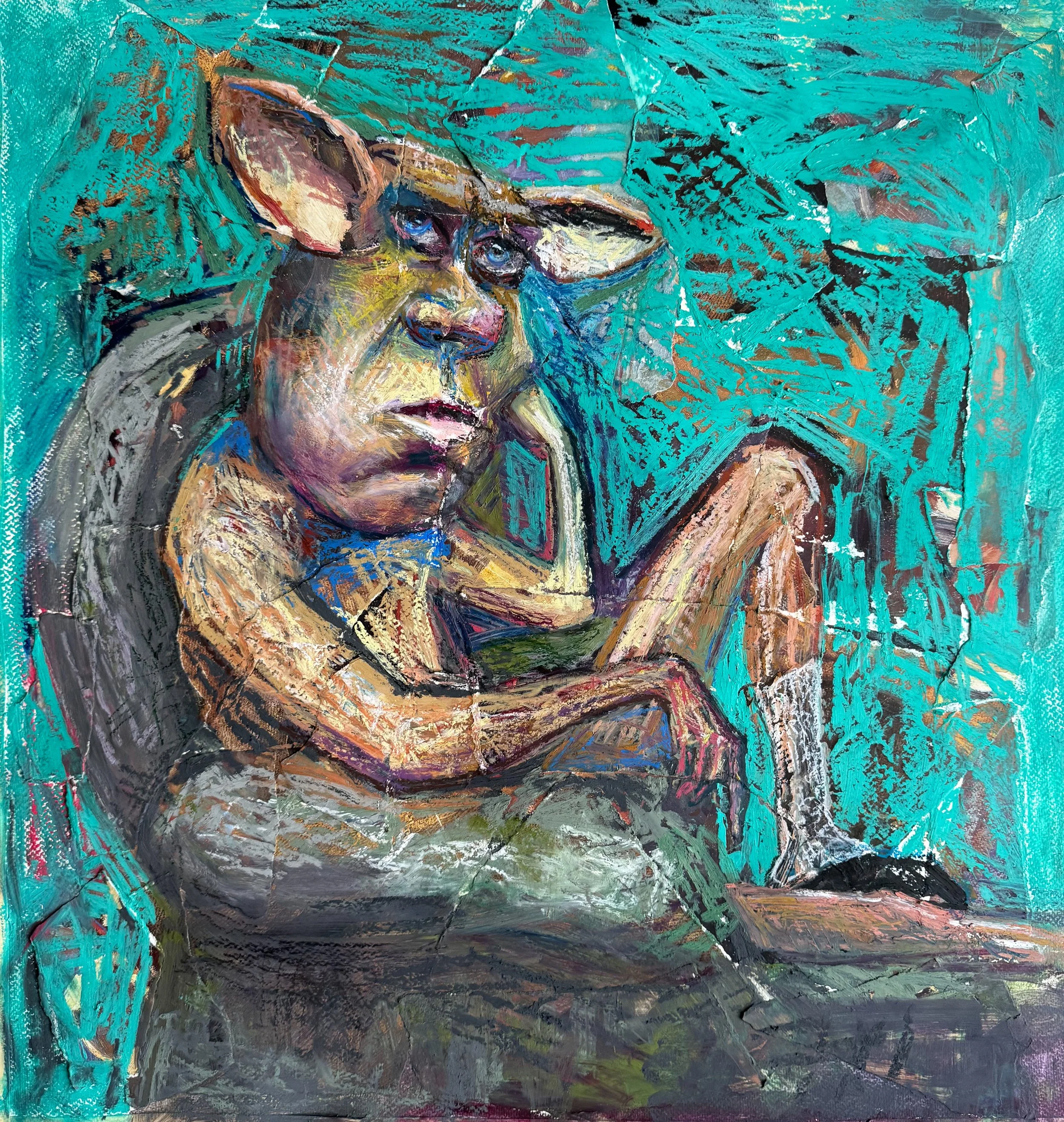
"Demon Dog" is crafted with oil pastel over a textured collage mounted on a cradled board. This work captures the tension between strength and vulnerability, power and protection. The larger dog figure commands attention, embodying a fierce authority that might initially seem absolute. But look closer—underneath that protective wing is a more petite, feminine figure, not merely sheltered but perhaps the true force at play. She reminds me of the Italian matriarchs who quietly, yet undeniably, rule their families from within. Her presence challenges the hierarchy, suggesting that power dynamics are never as straightforward as they seem.
In my work, I delve into the realm of surreal fairy tales for grown-ups, where anthropomorphic figures like this dog and woman stand in for the complex undercurrents of social contracts and power struggles that shape our lives. As a Los Angeles-based artist, I’m fascinated by the hidden narratives that govern society—the unspoken rules, the shifting power dynamics, and the ways we all play our roles, sometimes willingly, sometimes unknowingly.
This piece is a conversation between strength and subtlety, a reflection on the nuances of control and the quiet power that often goes unseen.
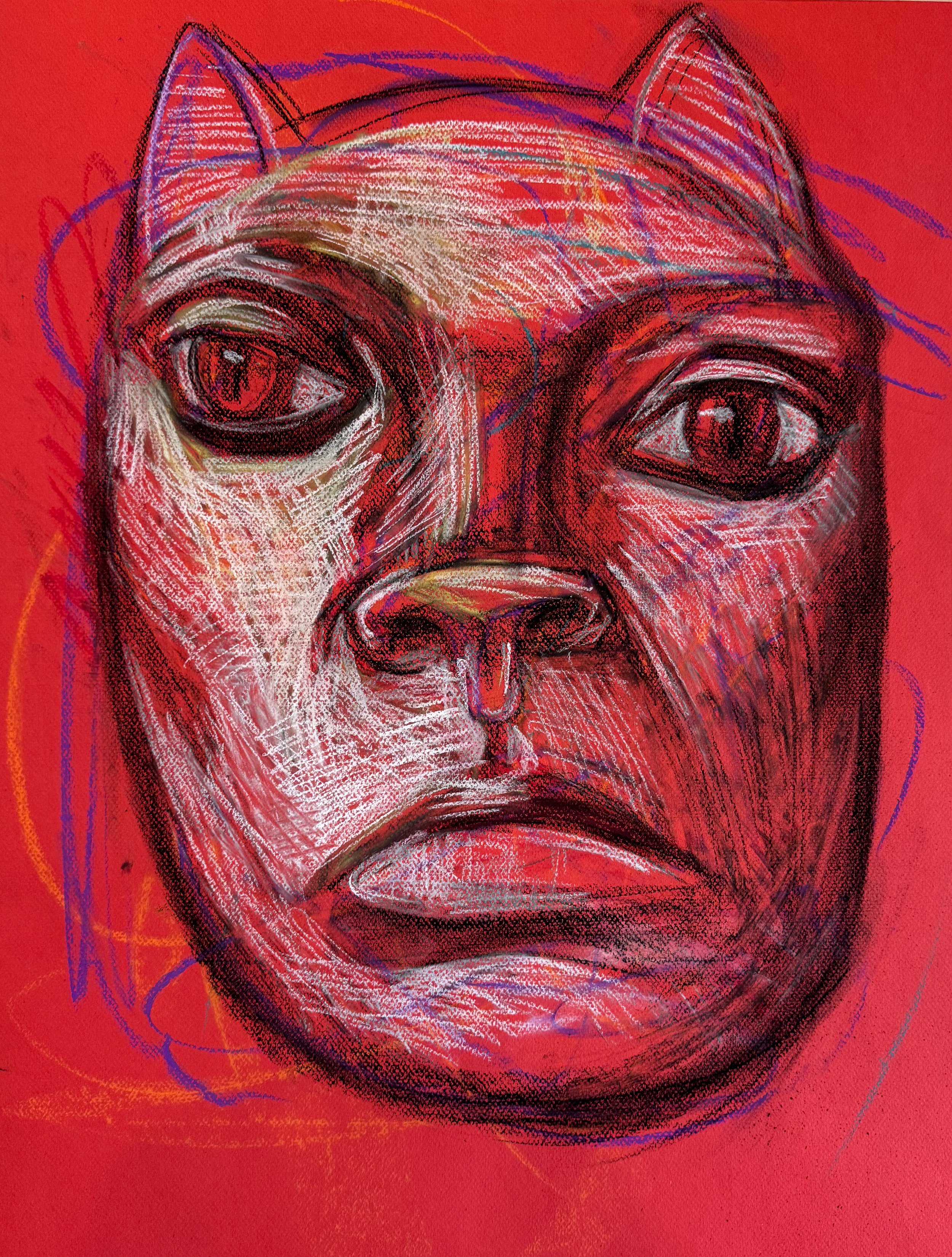
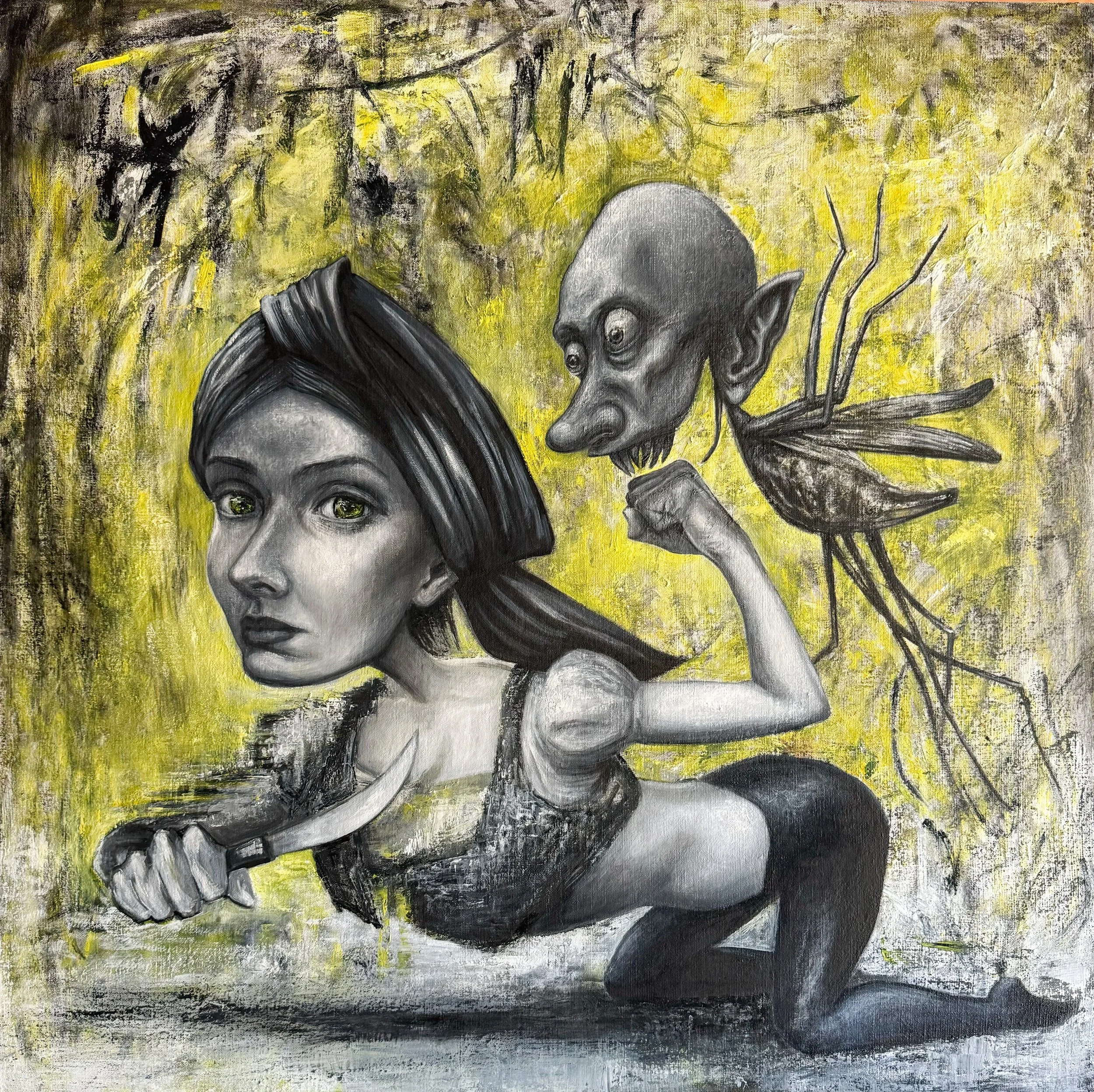
Olympia Binewski is a central character in Geek Love by Katherine Dunn. She’s a hunchback albino dwarf born into a family that runs a traveling carnival. Despite her physical differences, Olympia possesses a gentle and compassionate nature, often serving as a moral compass amidst the eccentricities of her family. Despite her challenges, she’s portrayed as deeply introspective, longing for acceptance and love.
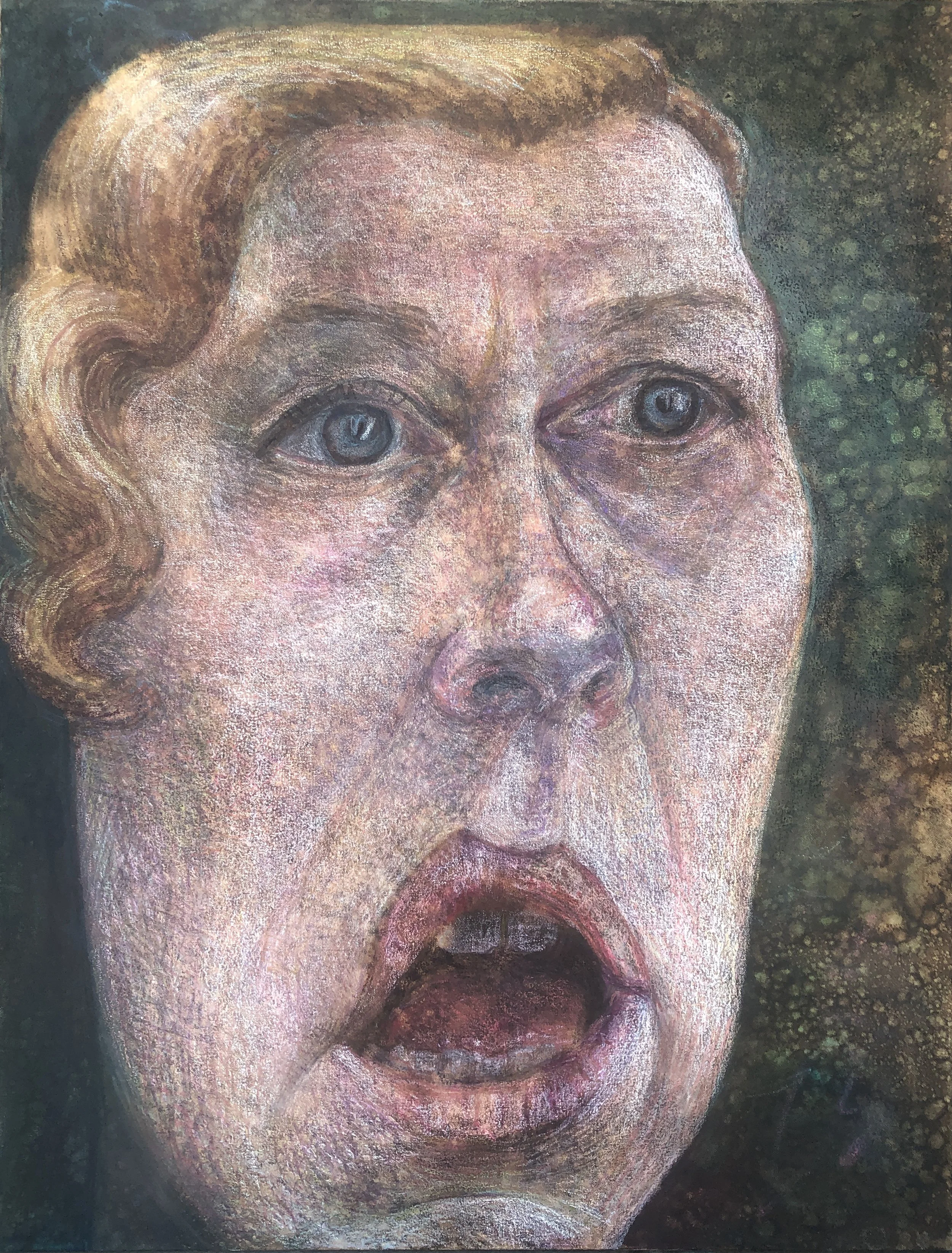
Vivid in its use of color and dynamic brushwork, dominated by warm red and orange hues and pink touches, the piece exhibits a raw emotional energy. Central to this composition is a distorted figure against a backdrop of abstract shapes and strokes, suggesting a tumultuous environment. The figure, rendered with stylistic exaggeration, features large, round eyes and an open mouth as if in shock or astonishment. The integration of wild yet deliberate brushstrokes contributes to an overall sense of urgency and visceral intensity in the painting.
This piece’s bold exploration of the human condition conveys a profound emotional resonance through subject matter and technique. The choice to prioritize emotion over representational accuracy invigorates the painting with a stirring inner life, allowing viewers to connect more instinctively with the work.
The painting's greatest strength is its emotive force. Compositional choices enhance the viewer's journey through the painting, enhancing the emotional experience with a dreamlike sense of place.
The brushwork here is particularly effective, creating a tactile presence that beckons the onlooker to explore the surface of the canvas up close. Investigating various brushstroke densities and opacities could provide an added layer of depth and complexity to subsequent pieces.
In areas where color has been dramatically juxtaposed, the strategic color placement galvanizes the overall color scheme without sacrificing the visceral engagement that is so compelling in this piece.
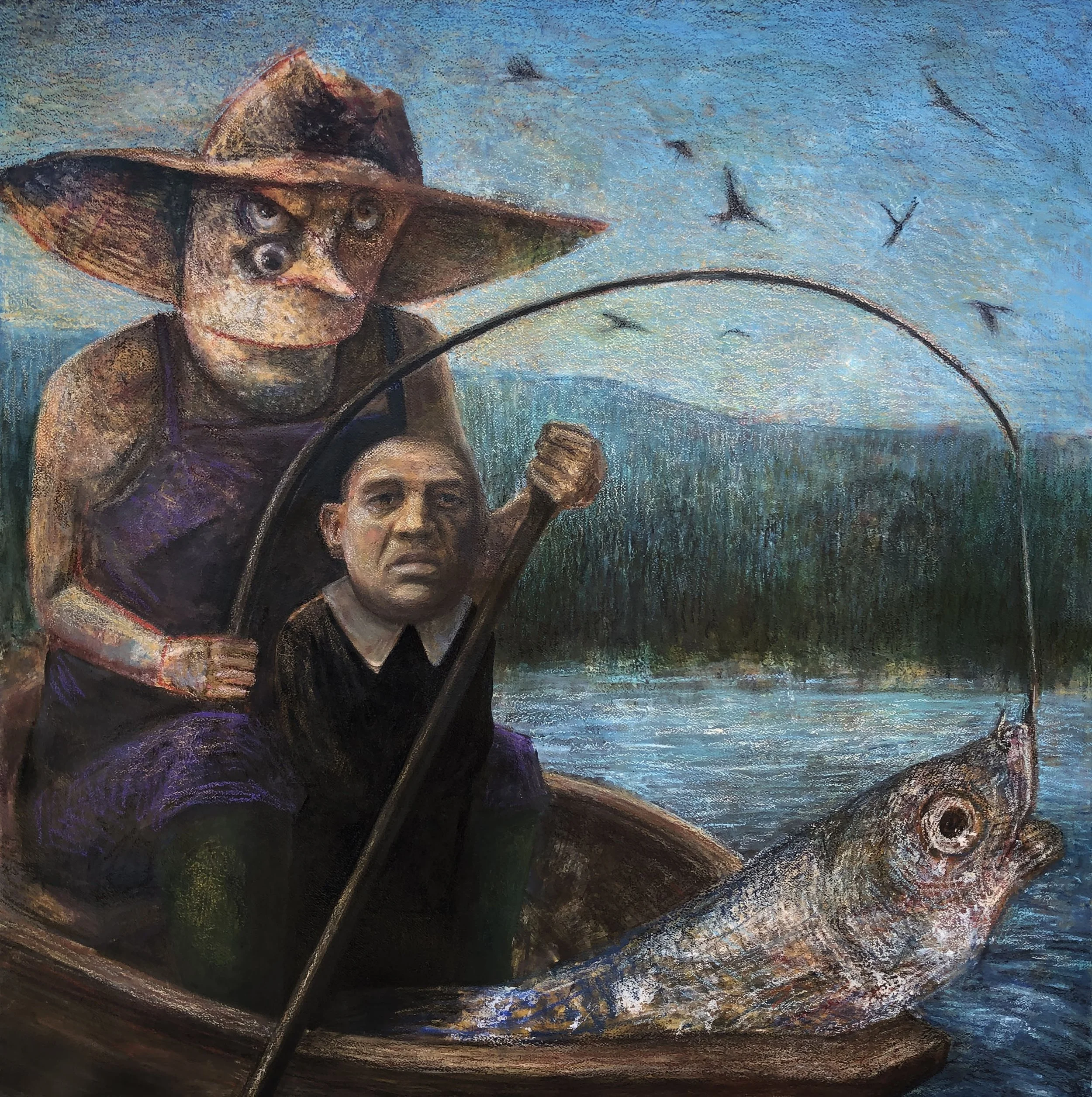
A creepy fisherman that bares a strong resemblance to a scarecrow rows a boat and pulls a hug fish out of the water with his fishing line. A solemn man child of a diminutive stature dressed in 19th century garb watches on from inside the boat.
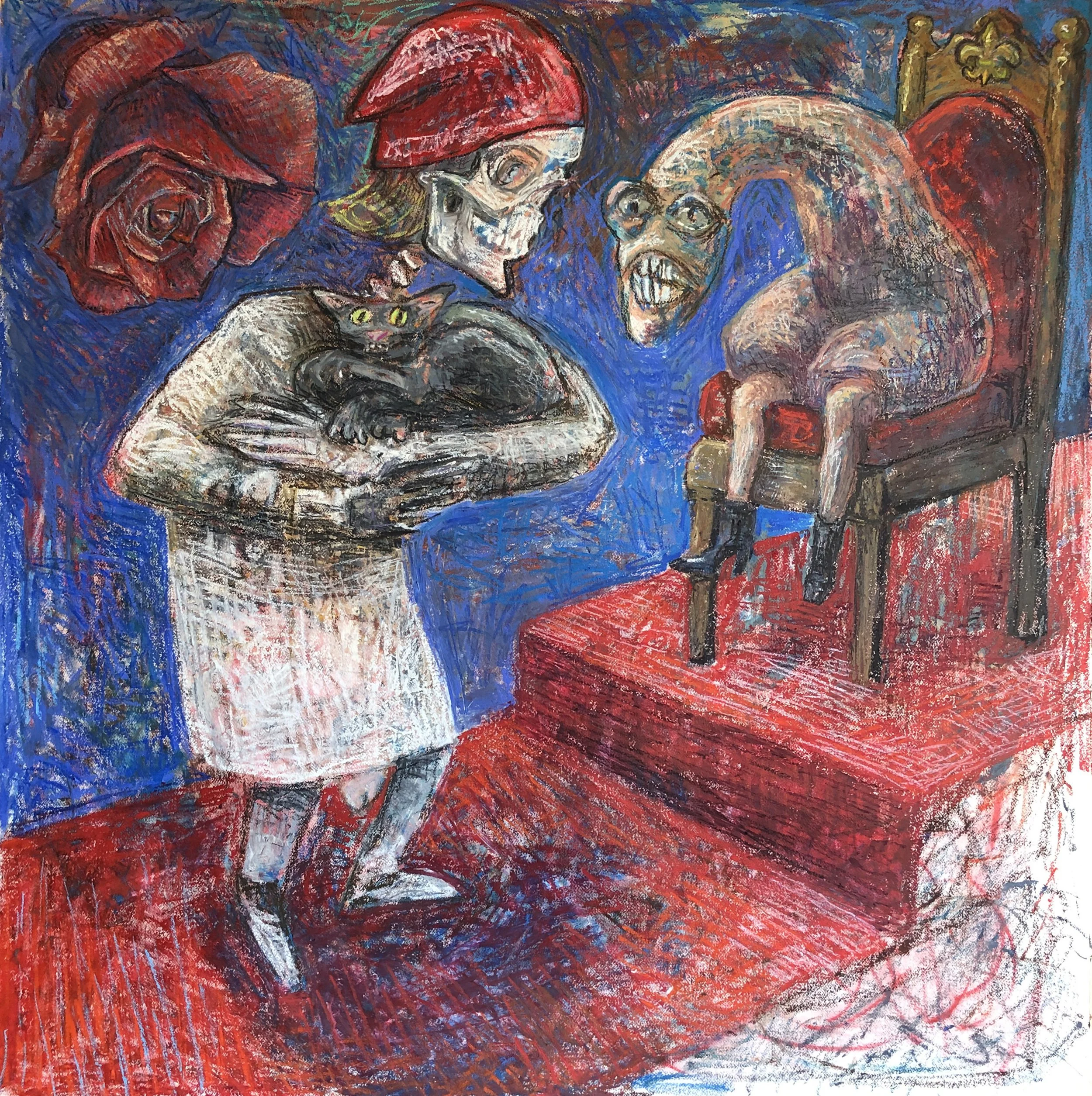
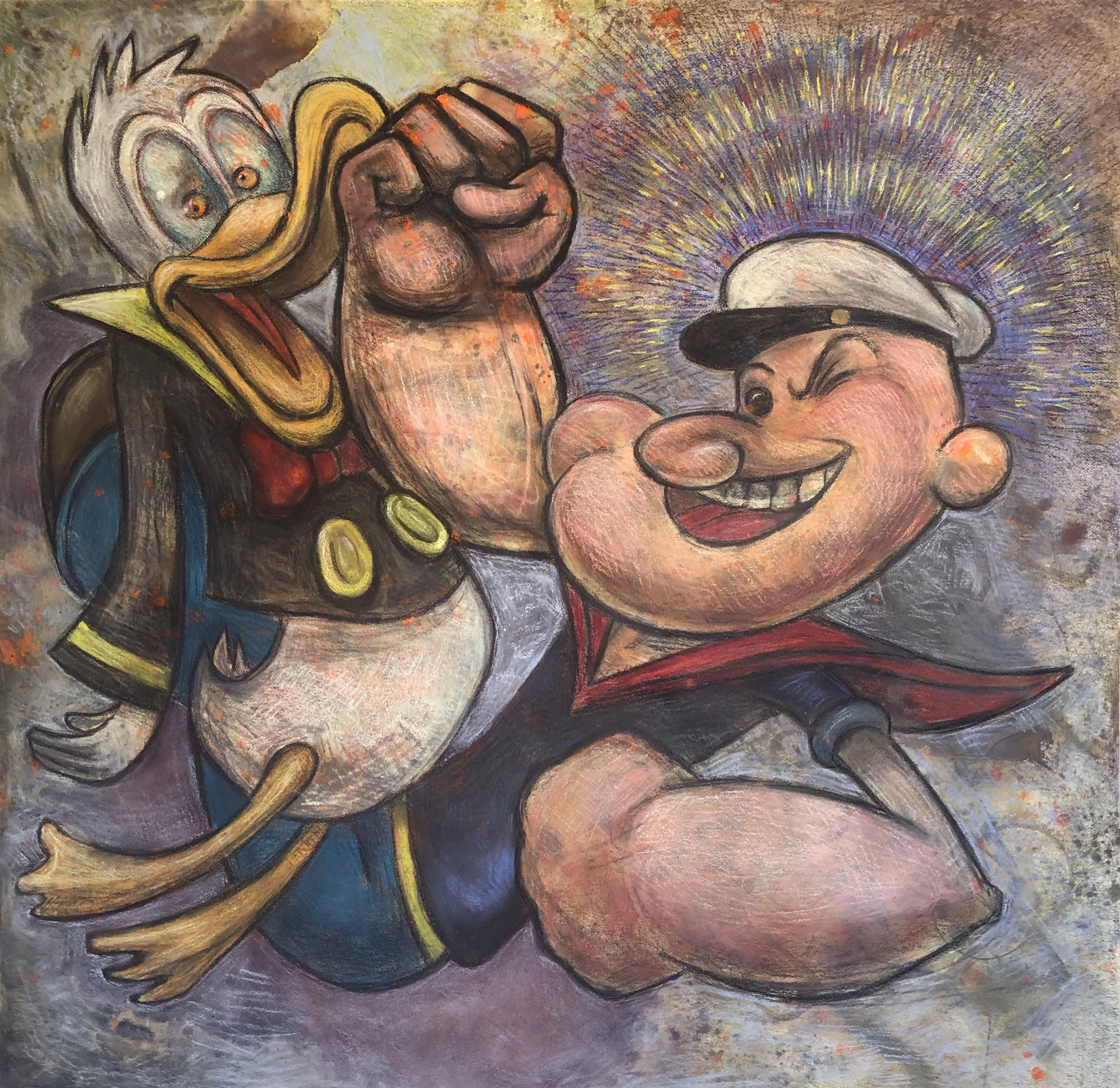
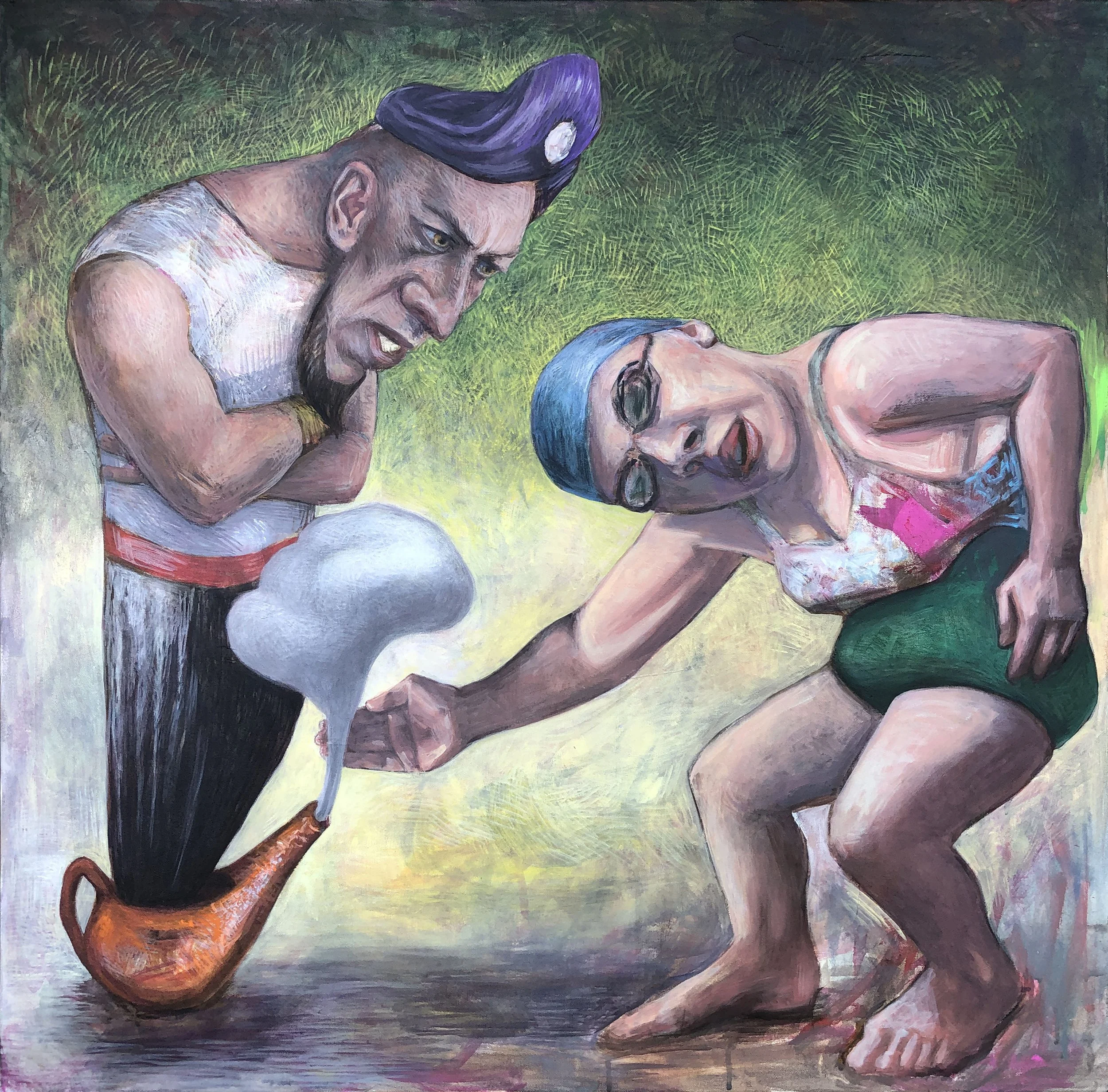
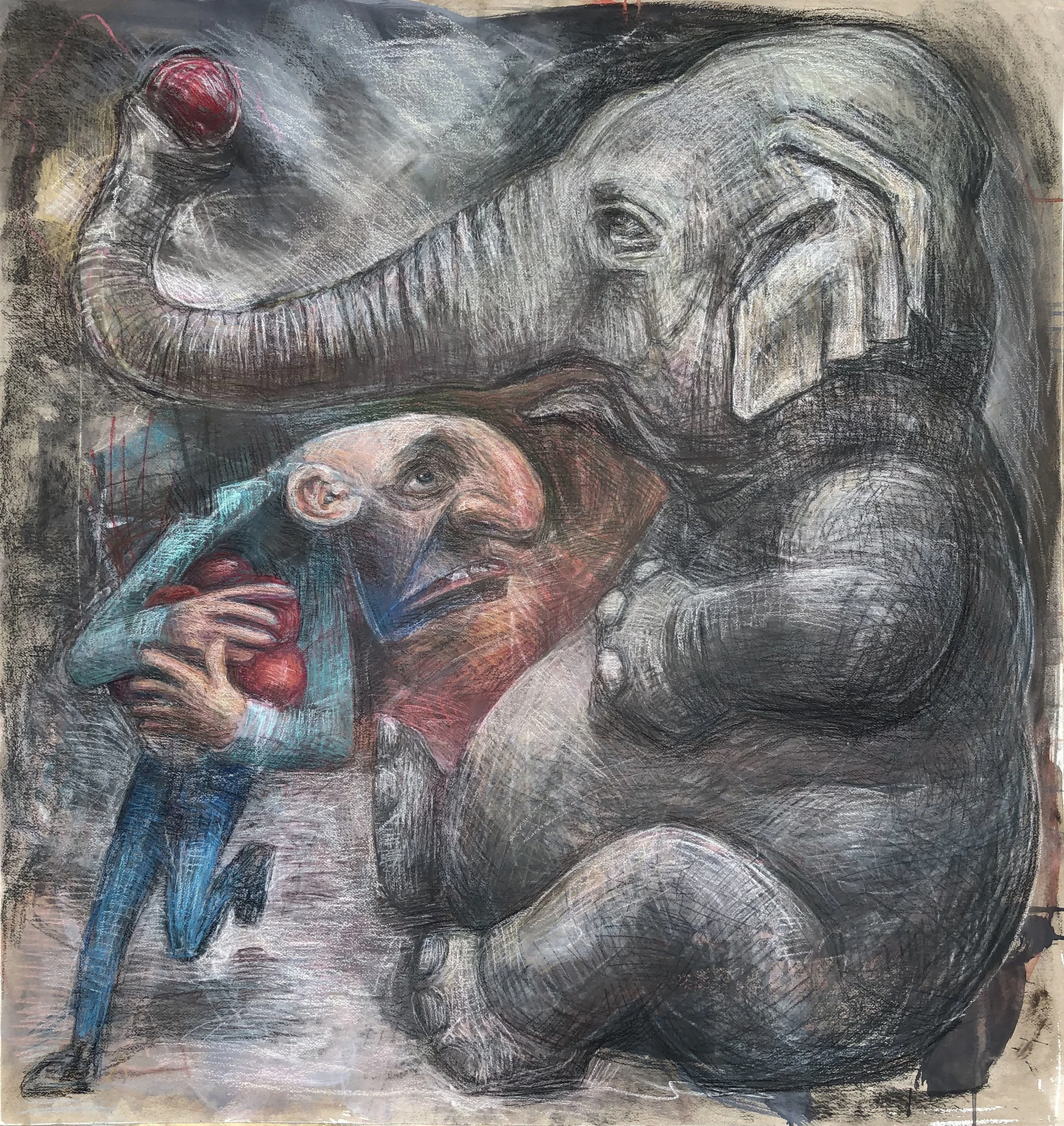
Allegorical drawing featuring elephant. Based on dreams, fairy tales, fables. Muted colors with some jewel tones.
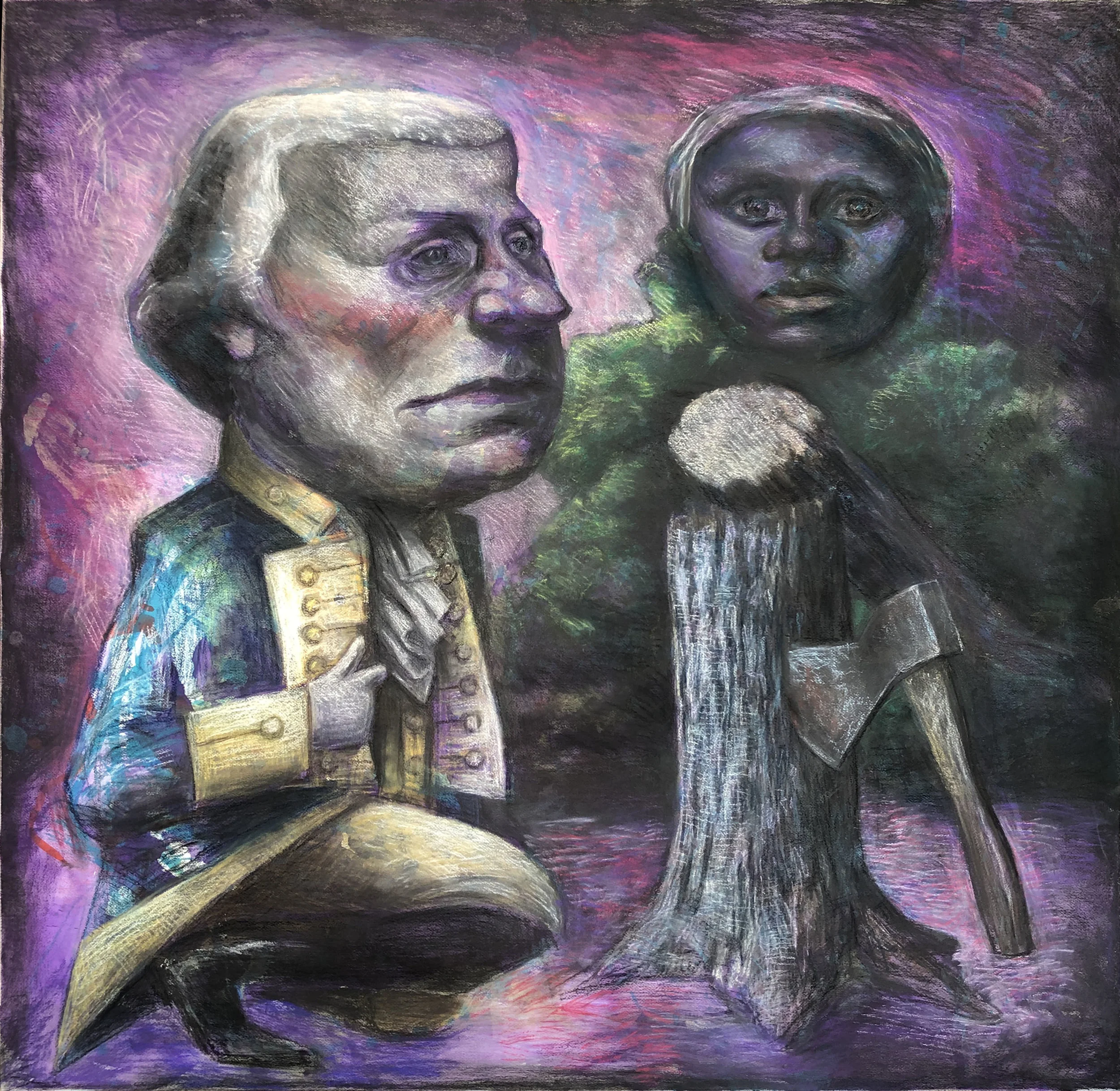
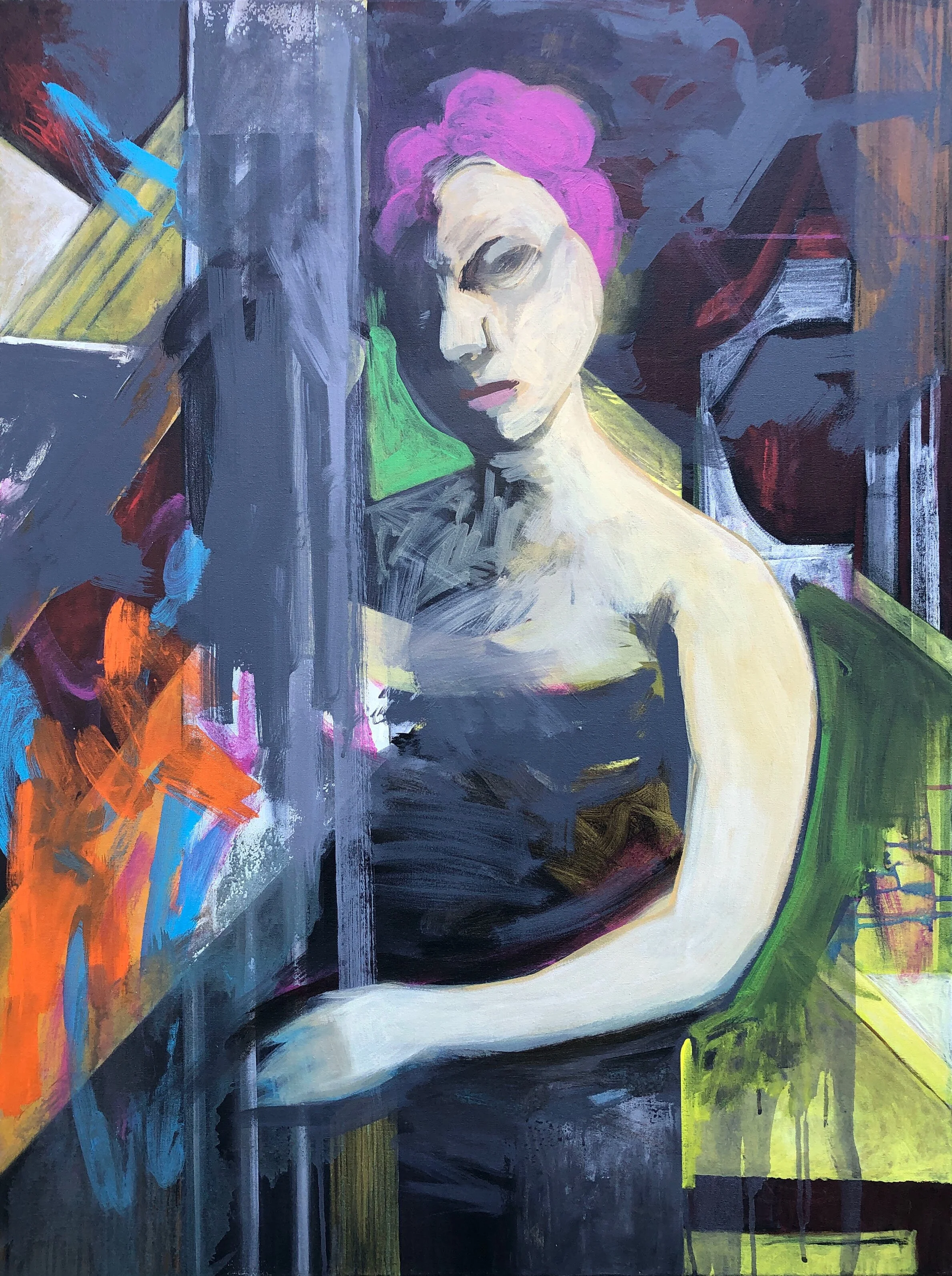
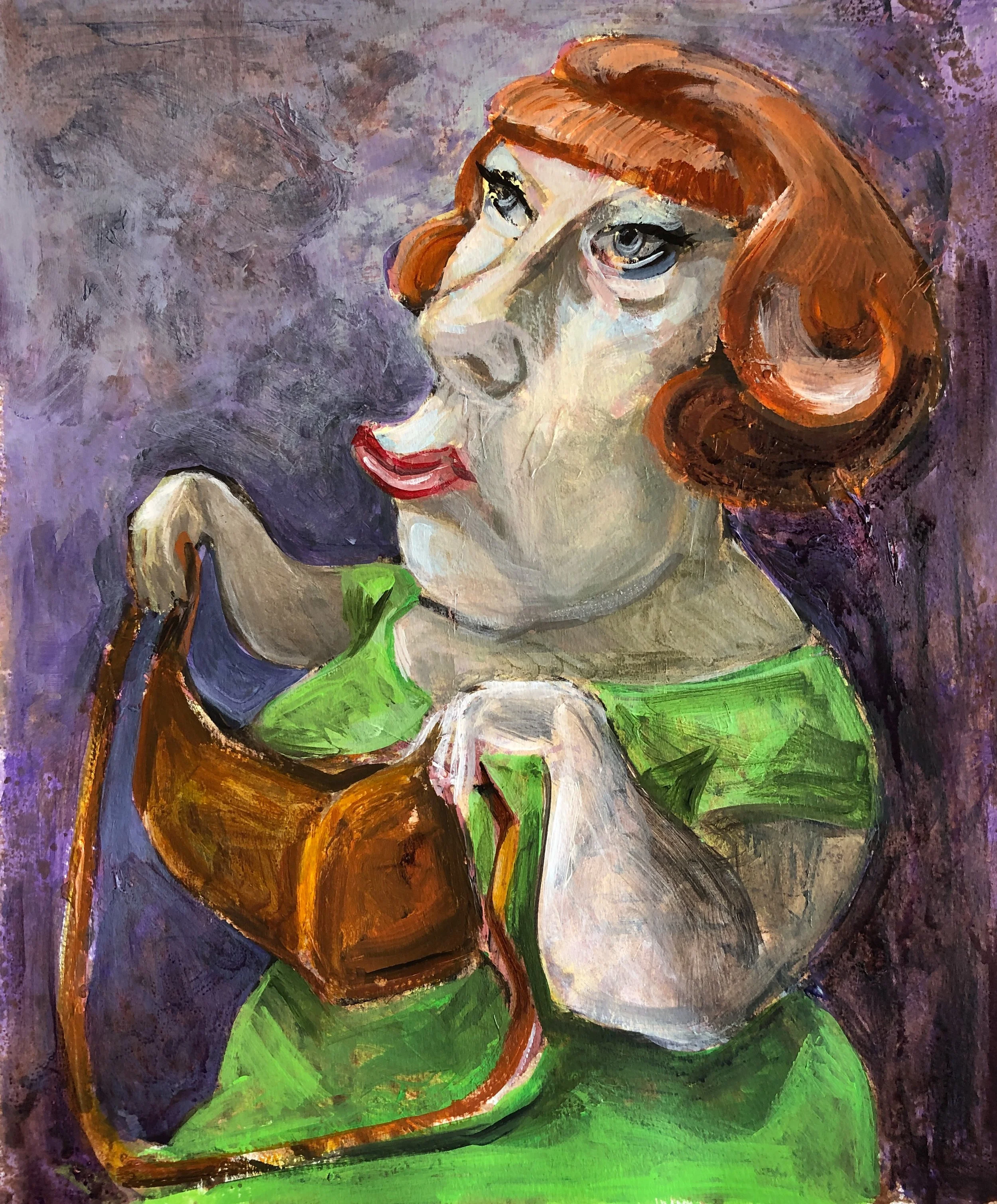
A beautiful yet neurotic actress flits from behind the curtain unsure of how she will be received.
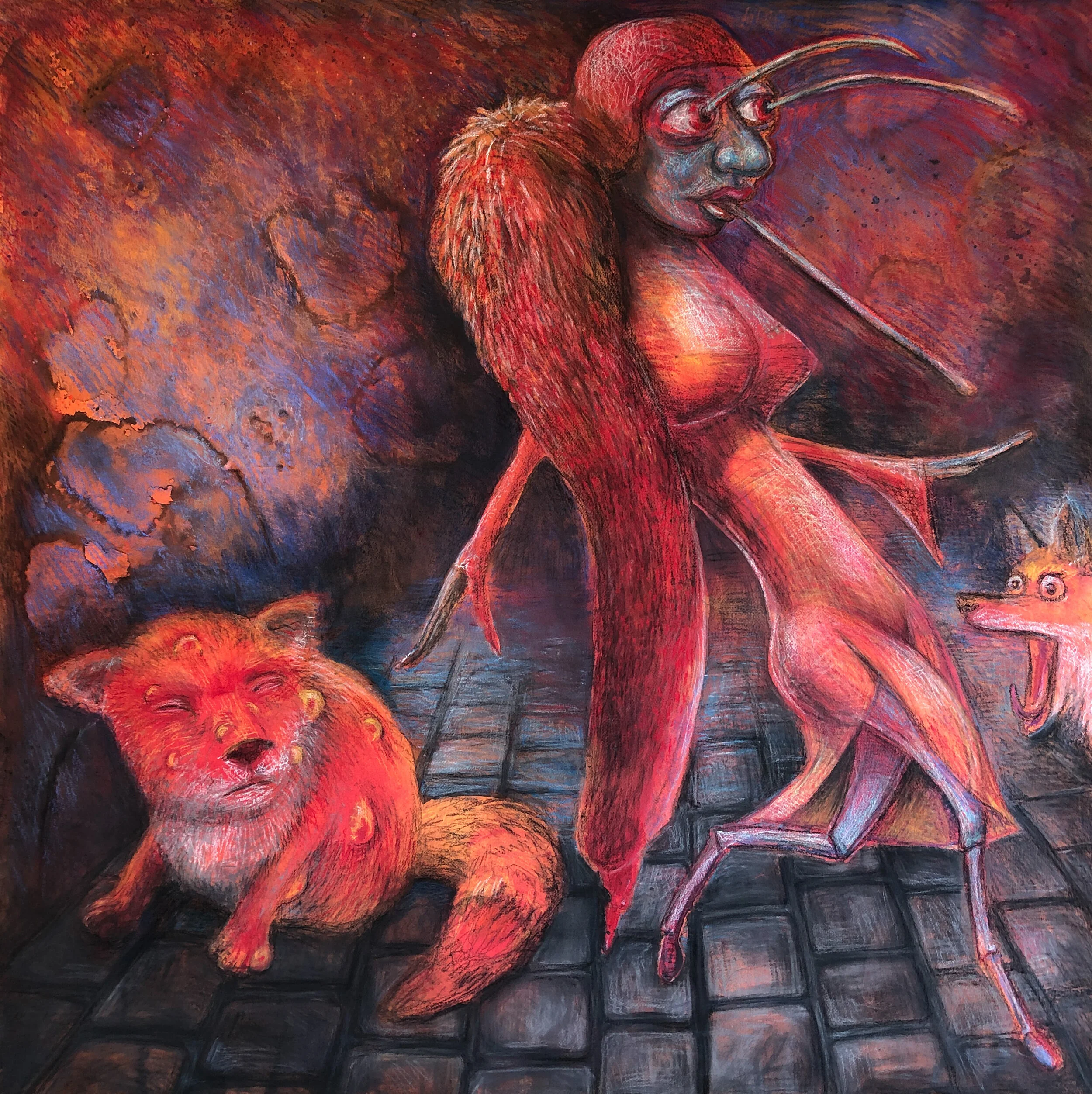
Based on Aesop Fable, an anthropomorphic mosquito woman dressed in 1920’s garb, stings a fox repeatedly. In the fable, another fox offers to help the suffering fox by shooing the other mosquitoes away; he refuses by saying, leave them, at least they’re well fed. The new mosquitoes that will come will be hungry and will bite him all over again.
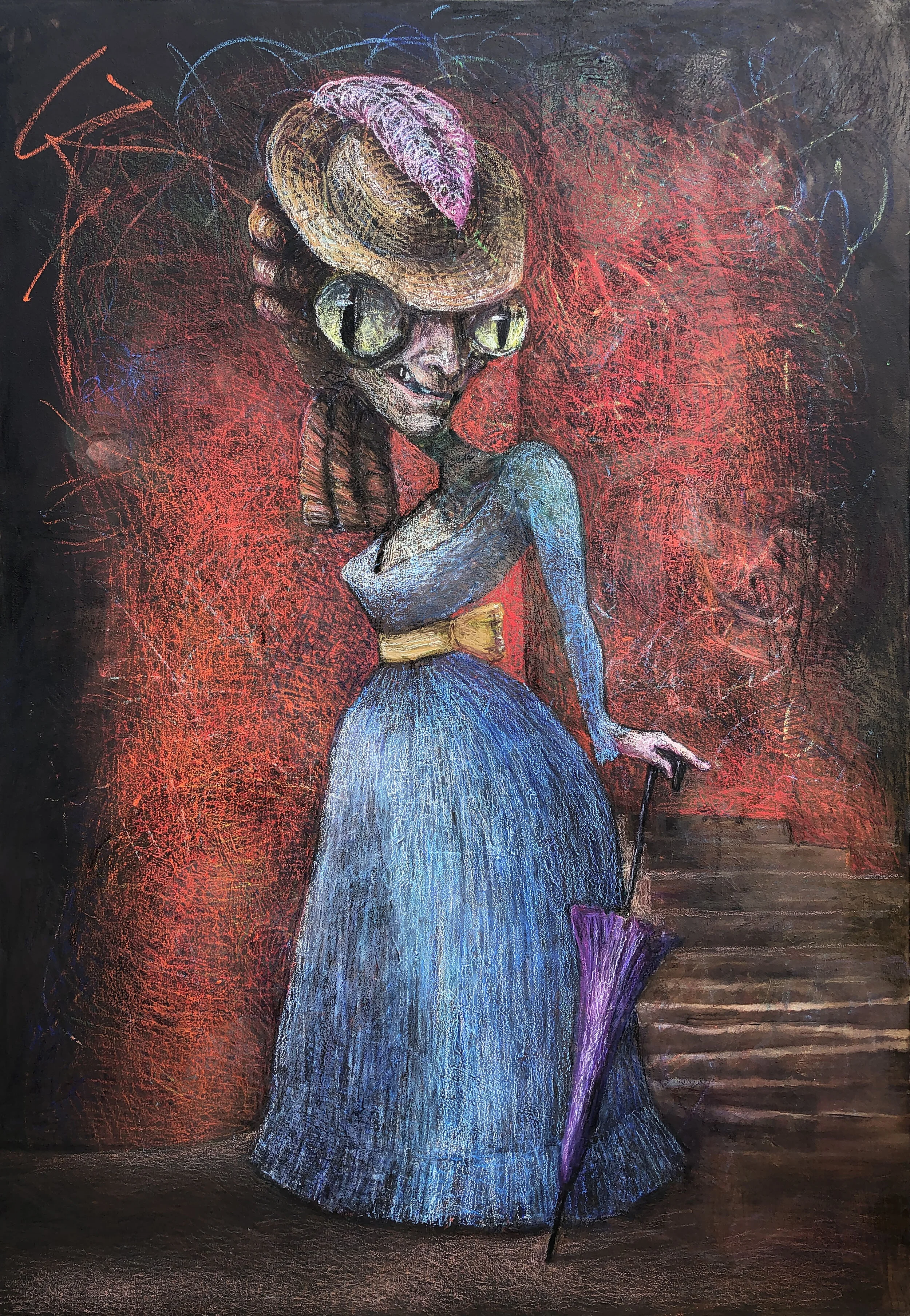
Dressed in fashionable eighteenth-century costume, she gazes at us coquettishly with reptilian eyes in a windowless interior at the bottom of a flight of stairs. Like an abandoned space in the recess of a mind, she seems to be part of atmospheric scribble. To the left, the presence of another is denoted by the long shadow cast upon her dress.
Where are we when we are looking at her; is she threatening to us or threatened by something else at the same time?
A limp, unconscious woman is being hauled away into a cave by a man disguised as a bear. A guilty clown looks on, with a “who me?” look on his face. His eyes occluded to the dark scene unfolding.